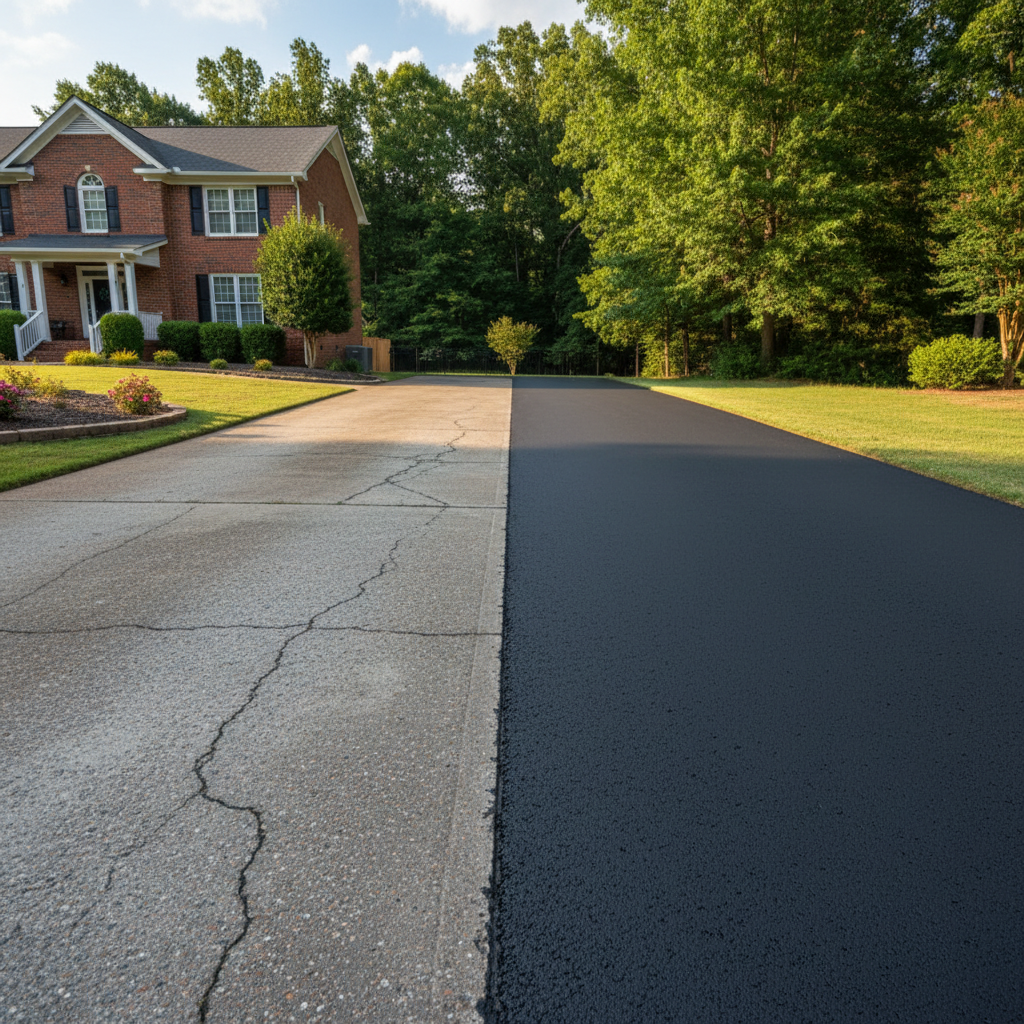
Your asphalt driveway is looking rough, isn't it? Cracks, potholes, maybe even some standing water after a good Atlanta thunderstorm. So, what's the move? Do you just slap a new layer on top, or do you tear it all out and start fresh? It's a common question I get from folks all over the city, from Buckhead to Decatur, and honestly, there's no one-size-fits-all answer. But I can tell you what I've seen work and what usually doesn't, especially with our red clay soil and those hot, humid summers.
The Quick Fix: Asphalt Overlay (Resurfacing)
An asphalt overlay, or resurfacing, is exactly what it sounds like: we clean up your existing driveway, make some minor repairs to any serious cracks or potholes, and then lay a fresh layer of new asphalt right over the top. Think of it like putting a new coat of paint on an old wall – it looks great, but it's only as good as what's underneath.
Cost: This is usually the cheaper option, no doubt about it. You save on the labor and disposal costs of tearing out the old material. For a typical residential driveway, you could be looking at 30-50% less than a full replacement.
Durability: Here's the catch. An overlay's lifespan really depends on how good your existing driveway is. If the underlying structure is stable, with just surface cracking and minor wear, an overlay can give you another 8-15 years. But if you've got significant structural issues – widespread alligator cracking, major potholes, or drainage problems – those issues are likely to show through the new layer pretty quickly. We call that 'reflection cracking,' and it's a real headache.
Maintenance: Just like any asphalt, you'll want to sealcoat it every 2-3 years to protect it from the sun and rain. Keep an eye out for any new cracks, especially if they follow the pattern of old ones, and get them sealed promptly.
Appearance: A fresh overlay looks fantastic. It's smooth, black, and really boosts your home's curb appeal. It can even help with minor leveling issues, but it won't fix major dips or drainage problems, unfortunately.
The Full Reset: Remove and Replace
This is the comprehensive approach. We bring in the heavy equipment, rip out all the old asphalt, address any sub-base issues (like that pesky Georgia red clay getting too wet), lay down a fresh, compacted aggregate base, and then pave with new asphalt. It's a bigger job, but it's often the right one.
Cost: This is the more expensive option upfront. You pay for demolition, hauling away debris, new base material, and more asphalt. It's a bigger investment, but it buys you lasting quality.
Durability: This is where full replacement really shines. When done right, with a solid sub-base and proper drainage, a new asphalt driveway can last 20-30 years, sometimes even longer. You're building from the ground up, so you're not inheriting any of the old problems.
Maintenance: Similar to an overlay, regular sealcoating and crack sealing are key. But because the foundation is new and stable, you'll likely run into fewer issues overall, meaning less reactive maintenance.
Appearance: Flawless. A brand-new driveway has a pristine look, and it allows us to correct any existing drainage issues, making sure water flows away from your house, which is super important in our rainy season.
So, Which One's Right for Your Atlanta Home?
Here's my honest take. If your driveway has just superficial cracks, maybe some fading, and generally looks worn but isn't falling apart, an overlay can be a great, cost-effective solution. It'll give you a beautiful new surface for years.
However, if your driveway has:
Extensive alligator cracking (looks like alligator skin)
Numerous or deep potholes
Significant dips or humps
Poor drainage that causes standing water
Been patched multiple times already
Then you're probably looking at a full remove and replace. Trying to overlay a driveway with serious structural issues is like putting a band-aid on a broken leg; it might look better for a bit, but the underlying problem is still there and will inevitably resurface. I've seen too many homeowners regret trying to save a buck on an overlay when what they really needed was a fresh start.
Especially with our Atlanta weather – those hot summers and heavy rains – a solid foundation is crucial. Water is asphalt's worst enemy, and if your sub-base isn't draining right, you're going to have problems no matter how new the top layer is.
My recommendation for most homeowners in Atlanta with an aging, problematic driveway is usually to go with a full remove and replace. It's a bigger investment, yes, but it pays off in the long run with superior durability, less hassle, and better performance against our local conditions. You'll get a driveway that lasts, looks great, and adds real value to your home. Give us a call at Majestic Asphalt Company, and we can come out, take a look, and give you an honest assessment of what your driveway truly needs.