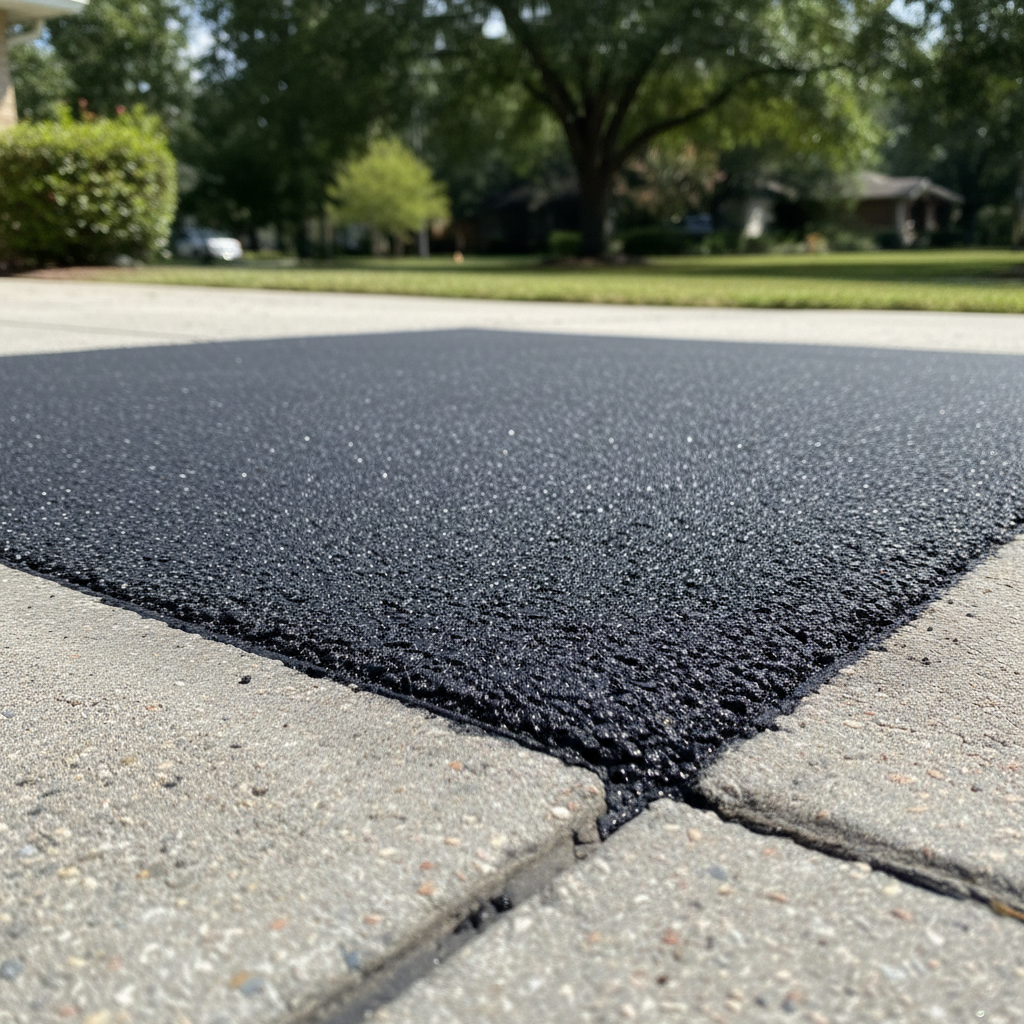
What's the difference between patching and a full replacement?
This is usually the first thing folks ask me when they call about a beat-up driveway. Look, patching is pretty much what it sounds like: we're just fixing specific, damaged spots in your existing asphalt. Think of it like putting a bandage on a cut. We cut out the bad part, clean it up, and then fill it with fresh asphalt. A full replacement, though, means we're ripping out everything right down to the base and putting in a brand-new driveway from scratch. That's a much bigger project, obviously, and a whole lot more expensive.
You'll want to patch when the damage is just in one or two spots – maybe a few potholes, some spiderweb cracks in a small area, or a utility cut that needs fixing. But if your whole driveway looks like a spiderweb, or it's got major drainage problems and is crumbling everywhere, then patching is just throwing good money away, honestly. That's when we'd be talking about a full replacement. It's really about finding the right fix for the problem, not just the cheapest one.
When is patching a good idea for my Atlanta driveway?
Patching makes a lot of sense if you're trying to get more years out of a driveway that's still pretty good overall, but has developed a few trouble spots. Maybe you've got one or two deep potholes from heavy trucks, or a tree root pushing up that's caused some local cracking. It's also perfect for fixing damage from utility work, like when the gas company digs up a section. For smaller, isolated issues, patching can save you a ton of money compared to redoing the whole thing.
It's also a smart move if you're planning to sell your house soon and just need to spruce up the curb appeal without a huge investment. A well-done patch can really change how your property looks to potential buyers. Just make sure you're working with a reputable company like Majestic Asphalt Company; a bad patch can actually look worse than the original damage, you know?
What types of patching methods do you use?
We've got a few ways to tackle a patch, depending on the damage we're looking at. The most common and usually the toughest method is called a 'cut and patch' or 'remove and replace.' We square off the damaged area, cut out the old asphalt right down to the base, clean out any loose bits, and then fill it with new hot asphalt. We compact it really well, and it blends in pretty nicely. This is what you want for potholes and bigger areas of trouble.
Then there's 'skin patching' or 'overlay patching.' This is where we put a thin layer of asphalt over a damaged area without taking out the old stuff. It's quicker and cheaper, but it's really only for very shallow dips or minor surface imperfections. It's not a long-term solution for deep potholes or structural issues. We also do 'infrared patching,' which uses infrared heat to soften the existing asphalt, blend in new material, and then re-compact it. It's great for seamless repairs on smaller spots, especially if you want it to look really clean.
How long does an asphalt patch last in Atlanta's climate?
That's a tricky question because it depends on a bunch of things. A good, properly installed cut-and-patch job, using quality materials and good compaction, can last anywhere from 5 to 10 years, sometimes even longer. But that's assuming the ground underneath is stable and the rest of your driveway isn't falling apart around it.
Atlanta's weather can be pretty tough on asphalt. We get those hot, humid summers that soften the asphalt, followed by freezing temperatures in winter that can cause expansion and contraction, especially with our clay soils. Heavy rain and poor drainage are also big culprits. If water is constantly sitting on or under the patch, it's just not going to last as long. Regular maintenance, like sealing your driveway every few years, can really help extend the life of both the patch and the rest of your asphalt.
Can I just patch it myself?
You *can*, but I really wouldn't recommend it for anything more than a tiny, shallow crack. You can buy cold patch asphalt at any home improvement store. It's basically a mix of aggregate and asphalt binder that you can shovel into a hole and tamp down. It's a temporary fix, at best. It rarely compacts well, doesn't bond properly with the existing asphalt, and usually breaks down pretty quickly, especially with our heavy rains and temperature swings.
For a lasting repair, you need hot asphalt, specialized equipment for cutting and compacting, and the know-how to prepare the base correctly. If you're dealing with anything beyond a small, cosmetic issue, you're better off calling in professionals. We've got the tools and experience to make sure the patch holds up, saving you money and frustration in the long run.
What causes potholes and cracks in the first place?
Most of the time, it comes down to water getting where it shouldn't be. Asphalt is flexible, sure, but when water seeps into tiny cracks and gets under the pavement, it starts to erode the base layer. When that base weakens, the asphalt above it loses its support. Then, when a car drives over that unsupported spot, the asphalt flexes and cracks, eventually breaking apart and forming a pothole.
Our freeze-thaw cycles here in Atlanta really speed this up. Water gets in, freezes, expands, and pushes the asphalt up. When it thaws, it leaves a void, and the whole process just repeats. Heavy traffic, especially from bigger vehicles, also puts a lot of stress on the pavement, making it wear out faster. Tree roots can also cause significant damage by pushing up and cracking the asphalt from underneath. It's usually a combination of these factors that leads to the problems we see.
How much does asphalt patching usually cost?
Cost is always a big question, and it's tough to give a one-size-fits-all answer without actually seeing the job. It depends on the size of the area needing repair, how deep the damage goes, the type of patching method we use, and how easy it is to get to the area. A small, shallow patch might only cost a few hundred dollars. A larger, deeper cut-and-patch job, especially if it needs a lot of base repair, could be over a thousand.
When we come out for an estimate, we're looking at all those factors. We'll measure the area, figure out the underlying issues, and then give you a clear quote. What I can tell you is that a well-done patch is always going to be a lot less expensive than tearing out and replacing an entire driveway. It's an investment in extending the life of your existing asphalt, and usually, it's money well spent if the rest of your driveway is in decent shape.